










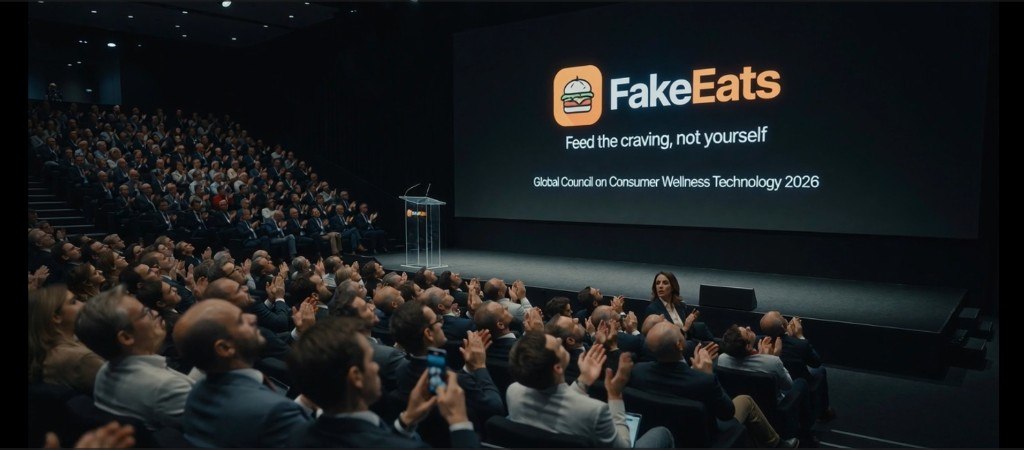
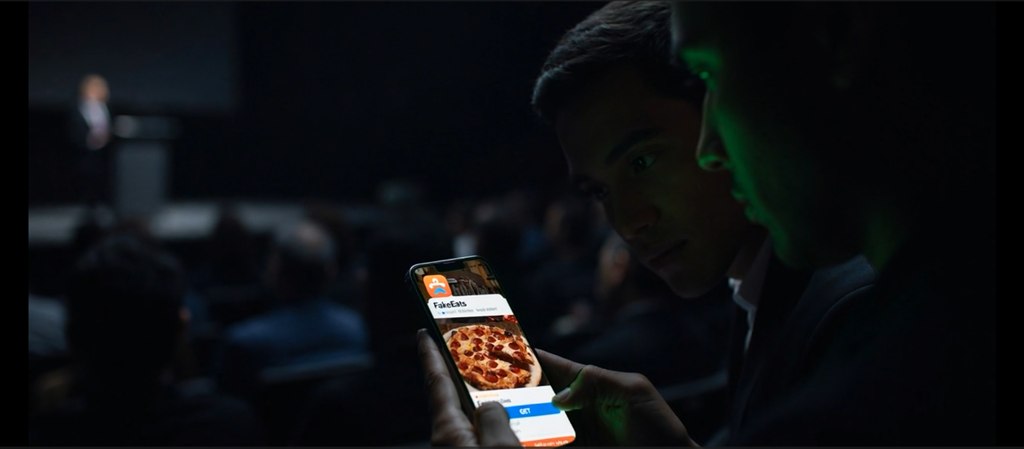
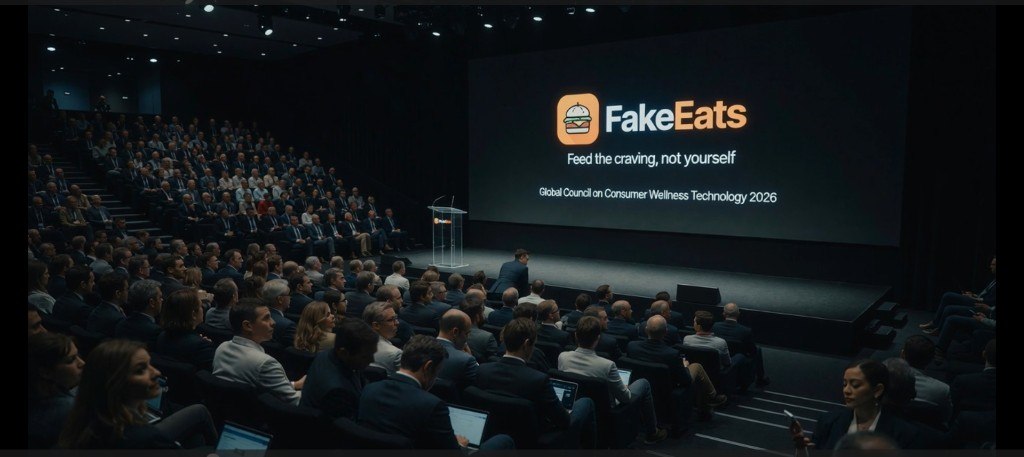
Every single layer
of it is fake.
And that’s exactly
why it works.

100 AI-generated restaurants. A full delivery experience. Every craving satisfied, every dollar kept, every calorie saved.

Download on the App Store
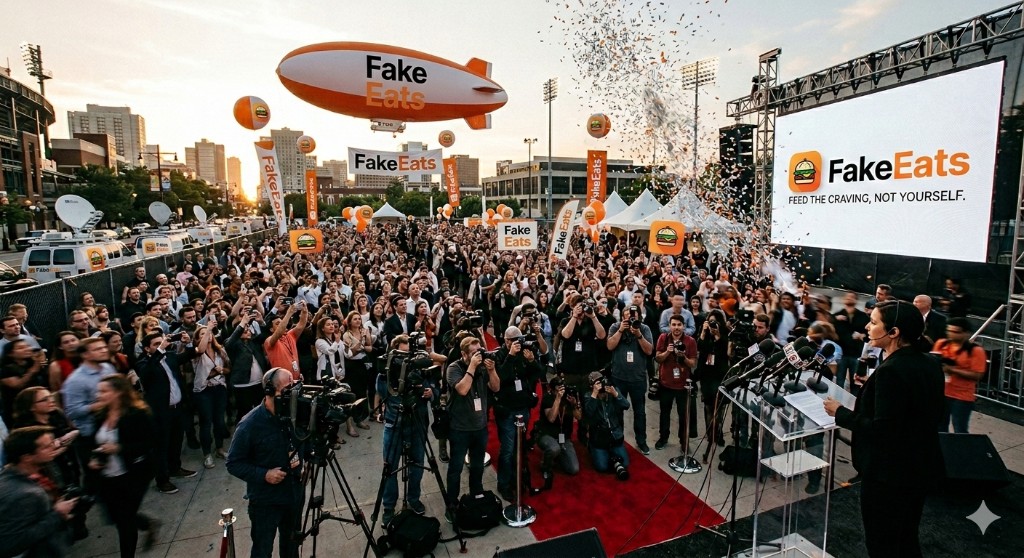
FakeEats press launch event
100
AI-generated restaurants
12min
Craving window. Exactly.
$1,566
Avg. annual delivery spend
$0
Never charged. Ever.
Press Events

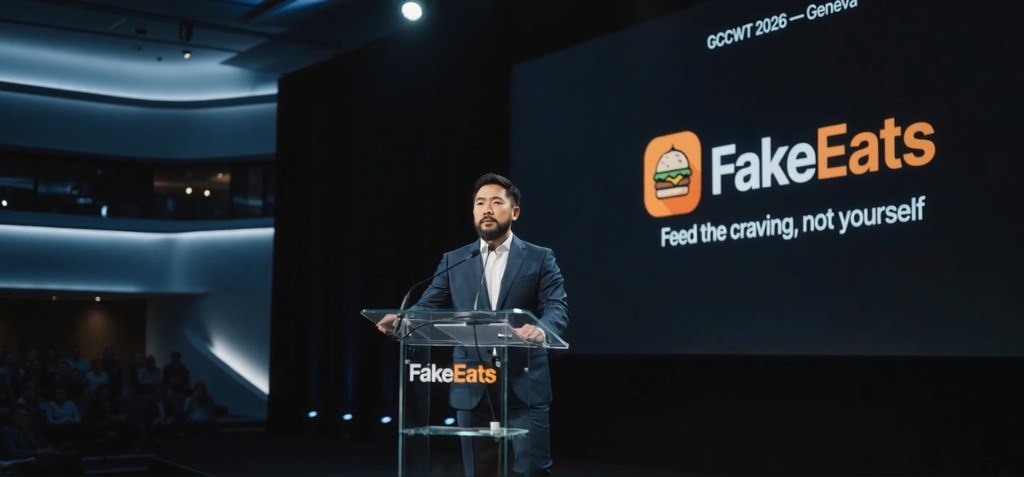
Global Council on Consumer Wellness Technology 2026

All event footage AI-generated.

ShowHide
Event Clips

Tap play for sound, then expand for fullscreen. Desktop: hover to preview (muted).

The Story

Built for the moment between the craving and the click.

ShowHide

The Problem

Millions of people have a complicated relationship with food delivery apps. The cravings are real. The hunger is real. And for a growing number of people, so is the inability to stop.

The warning signs are specific and surprisingly common: ordering again after you already ate, eating alone or in secret, feeling shame or guilt after, spending hours scrolling menus you know you shouldn’t, deleting the app and reinstalling it the same night. For many people, late-night delivery ordering has become a form of emotional eating — stress, boredom, loneliness, exhaustion — and the apps are engineered to meet that vulnerability at its worst moment.

Every animation, every sound, every one-tap frictionless moment is designed to make the next order feel inevitable. As Psychology Today notes, even deleting the app in a moment of strength isn’t enough — advanced retention strategies pull users back with a single notification. The Cleveland Clinic identifies food delivery apps as tools that can facilitate disordered eating behaviors, particularly for people who emotionally eat or struggle with binge eating.

The financial toll compounds the emotional one. The average American spends $1,566 a year on food delivery. For heavy users, that number is far higher.

The standard advice — delete the app, meal prep, set a budget — doesn’t address the compulsion itself. It just makes it harder to act on. And as anyone who has put their phone in another room and then gone to get it knows: harder isn’t the same as stopped.
The Insight

Food cravings are real. But research shows that a significant part of the compulsive ordering loop is driven by the ritual itself — the browsing, the decision-making, the cart filling up, the moment of pressing order. Research from the University of Michigan’s Berridge Lab shows that dopamine surges are driven by anticipation. The reward fires hardest during the ordering ritual, building toward a payoff.

Which means the ritual itself can be redirected — satisfied without consequence.

The Solution

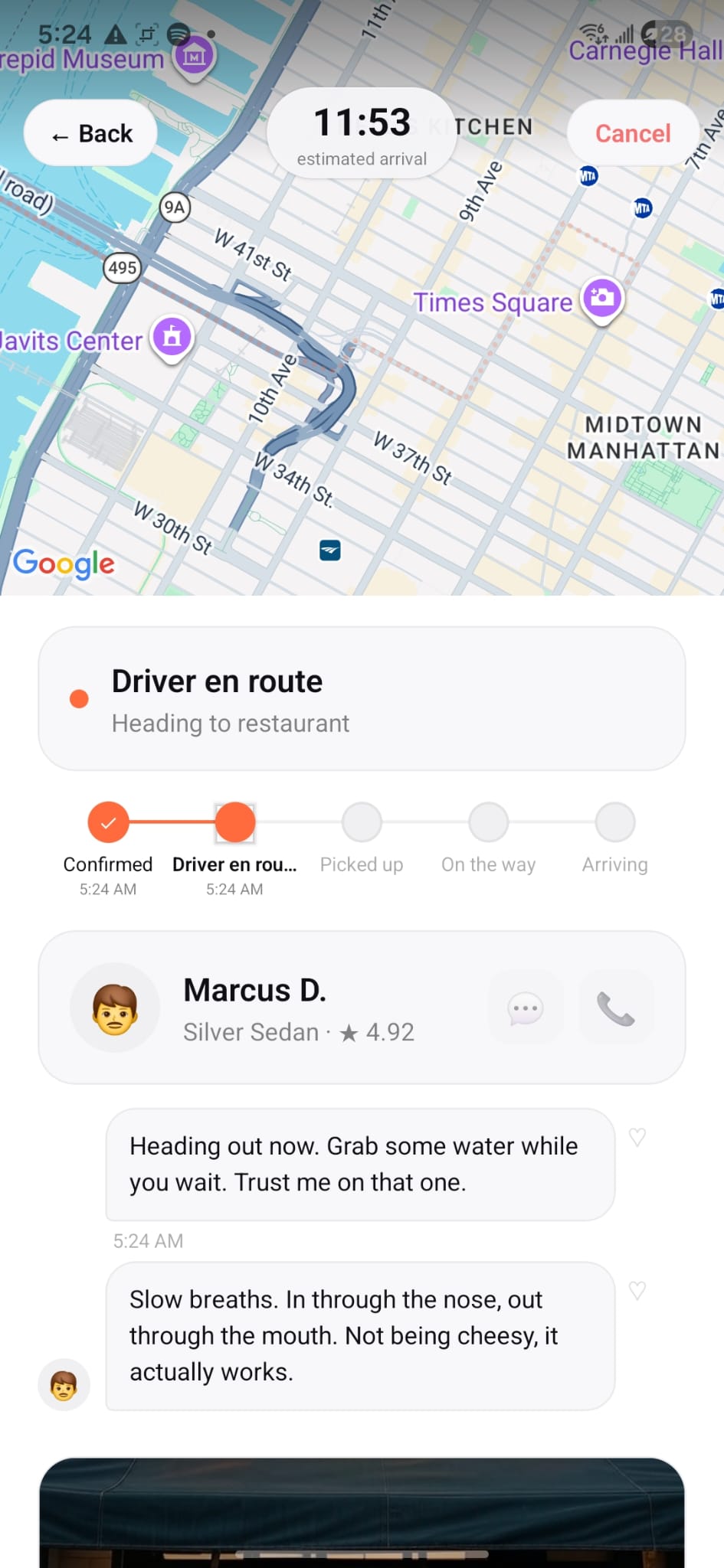
FakeEats gives users the complete delivery experience — 100 restaurants, 600+ menu items, a cart, checkout, and a 12-minute simulated delivery tracked on a live map with a real driver name, car, and ETA — and then delivers nothing. No food. No charge. No regret.

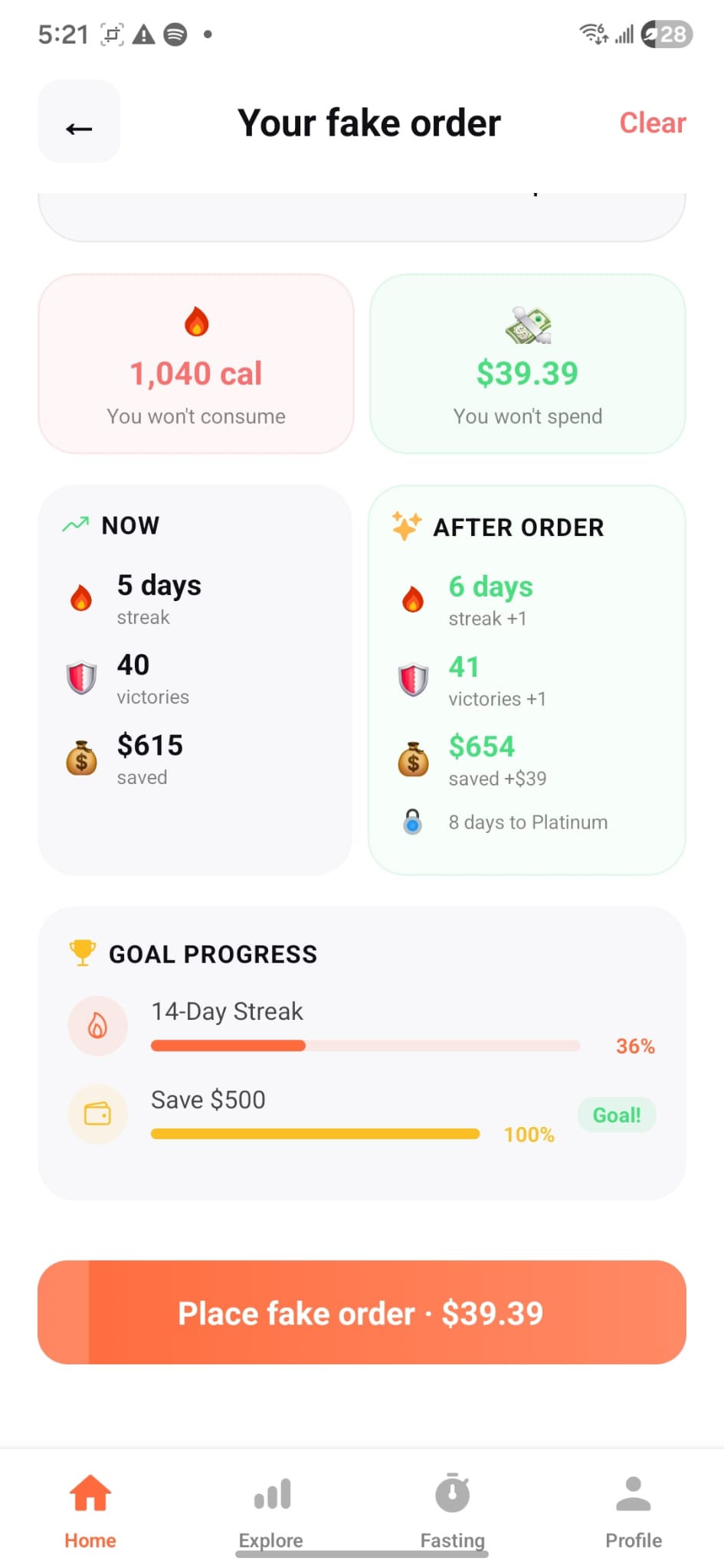
The 12-minute window is precise: cravings typically peak and pass within 10–20 minutes (University of Michigan, Berridge Lab). By the time the driver “arrives,” the urge has passed on its own. Users see a Victory screen showing calories saved, money kept, and streak progress. The compulsion is satisfied. The consequence is gone.

This is urge surfing — a proven cognitive behavioral therapy (CBT) technique — delivered as an experience so convincing it satisfies the brain’s reward system without requiring willpower.

FakeEats doesn’t tell users no. It says yes to everything — and redirects them somewhere that costs nothing.

The Game Layer

FakeEats is also a progression game — and the game is designed so that winning it feels exactly like beating the compulsion.

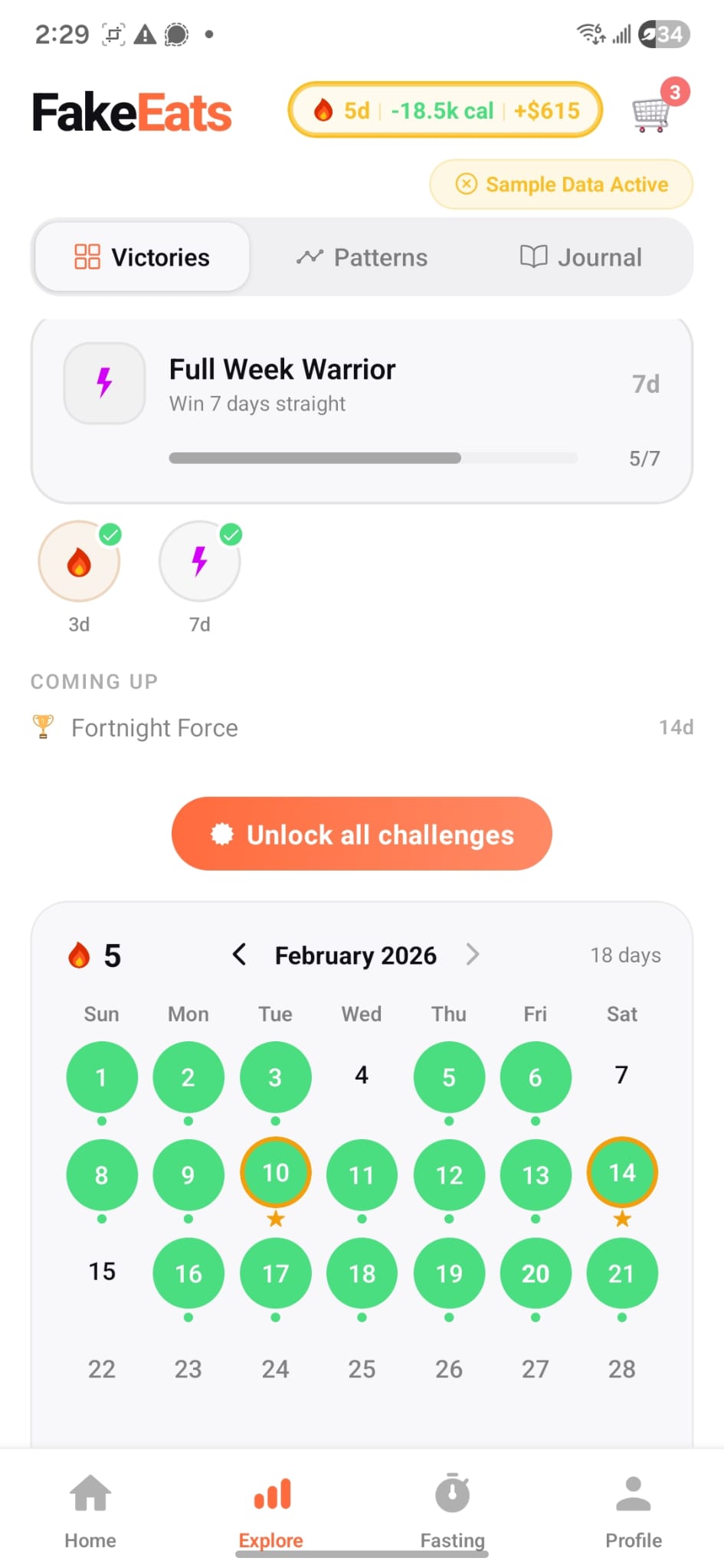
Every craving defeated builds a streak. Every streak milestone permanently unlocks a new tier of restaurants. The key word is permanently: once earned, a tier is never lost, even if a streak resets. Users are always building toward something and never lose ground they’ve gained.

Every streak milestone permanently unlocks a new tier of restaurants — a deeper, richer world that grows with the user and never resets. Five tiers from Bronze to Diamond, each revealing more of the FakeEats universe. The longer someone goes, the more there is waiting for them.

🥉Bronze1 day streak — unlocks 20 new restaurants
🥈Silver3 day streak — unlocks 20 more
🥇Gold7 day streak — unlocks 14 more
💎Platinum14 day streak — unlocks 10 more (Pro)
👑Diamond30 day streak — unlocks 6 more (Pro)

Beyond streaks, users earn achievements across four categories — victories, money saved, calories saved, and exploration. 30+ weekly challenges reset every Monday and scale to individual activity levels. Exploration badges reward curiosity: trying new cuisines, ordering at different times of day, journaling after victories, learning your own trigger patterns.

The achievement system is deep enough that no two users move through it the same way. There is always a next milestone. Always a streak worth protecting. Always a challenge worth chasing.

The result is a game where the currency is self-control and progress is permanent. The same psychological mechanism that made the delivery app hard to quit becomes the mechanism that makes FakeEats hard to quit. Except now, every session is a victory instead of a regret.

The Build

FakeEats was built by a single developer — an entrepreneur with experience taking companies from zero to scale — using an orchestration of AI models and tools that simply didn’t exist six months ago. One person. Over a billion tokens. A complete fake world.

Every restaurant is AI-generated from scratch: unique names, storefronts, interiors, menus, food photography, calorie counts, pricing. 100 restaurants. 80+ cuisines. 600+ menu items. None of it is real. All of it is convincing enough to satisfy the brain’s craving loop.

Six months ago, building something like FakeEats would have required a full studio — designers, developers, writers, photographers, a content team. Instead, one person orchestrated a suite of AI models to generate 100 restaurants from scratch: the storefronts, the interiors, the menus, the food photography, the calorie counts. Over 1.1 billion tokens in a single 15-day stretch of development.

Five AI delivery driver characters accompany users through every fake order — each with a distinct personality and messaging that adapts to where you are in the experience. A more immersive cinematic driver experience is already in production.

This is what one person can build now. Six months ago it wasn’t possible.

The Result

A free app. One skipped delivery order pays for months of Pro. At $2.49 a month, FakeEats is the cheapest meal users will never eat.

Ready-to-Use Quotes

Copy-paste ready. Attributed to the FakeEats team.

ShowHide
The one that explains everything
“Every single layer of it is fake. And that’s exactly why it works.”
On the build
“Six months ago this wasn’t possible for one person to build. The restaurants, the food photography, the drivers, the menus — all of it AI-generated. We built an entire fake world, and it’s convincing enough to satisfy a real craving.”
On the insight
“A huge part of the ordering compulsion is the ritual — the browsing, the cart, the checkout. FakeEats gives you all of that and redirects it somewhere that costs nothing. The craving passes. It always does.”
On the approach
“Every other solution tells people no. Delete the app. Set a budget. Use willpower. FakeEats says yes to everything. And then nothing shows up. The craving passes. It always does.”
On the money
“The average person spends $1,566 a year on food delivery. One skipped order pays for months of the app. FakeEats might be the only wellness tool that pays for itself the first time you use it.”
On who it’s for
“It’s for anyone who has put their phone in another room and then gone to get it anyway. That moment — between knowing you shouldn’t and doing it anyway — that’s exactly where FakeEats lives.”
On the design
“We built the most complete food delivery experience in the world. And we made sure none of it arrives.”
On the science
“A craving lasts 10–20 minutes. A FakeEats order takes 12. By the time your driver arrives, the urge has already passed. That’s not a gimmick — that’s urge surfing, a proven cognitive behavioral therapy technique, delivered as a fake DoorDash.”
On the game layer
“The same psychological mechanism that made the delivery app hard to quit becomes the mechanism that makes FakeEats hard to quit. Except now, every session is a victory instead of a regret.”
On what makes it new
“This category didn’t exist before. Fasting apps tell you not to eat. Budgeting apps track your damage. FakeEats meets the compulsion exactly where it starts — and gives it somewhere harmless to go.”
Why This Is Noteworthy

Six stories in one.

ShowHide

It’s a new category.

No app has addressed the food delivery ordering compulsion specifically. Fasting apps tell you not to eat. Budgeting apps track your damage. FakeEats meets the compulsion exactly where it starts — and gives it somewhere harmless to go. FakeEats is the first.

It’s an AI story.

One developer. 100 AI-generated restaurants. 600+ menu items. Five AI driver characters. A complete fake world built with tools that didn’t exist six months ago. The build itself is the story of what’s now possible for a single person with the right orchestration of AI.

It’s a behavioral health story.

Compulsive food delivery ordering is increasingly documented by psychologists and covered by major health institutions as a real and growing problem. FakeEats is the first app-based tool designed around how the compulsion actually works — not willpower, but redirection.

It’s a game design story.

FakeEats applies progression mechanics — permanent unlocks, streak rewards, 100+ achievements, weekly challenges — to behavioral health. The same psychological levers used to keep people inside compulsive apps are reversed and used to help them escape. The game layer is both the retention mechanism and the therapy. They are the same thing.

It’s a money story.

$1,566 a year average. $2.49 a month solution. One skipped order pays for months of the app. The math is the headline.

It’s inherently viral.

“There’s an app where you order food that never comes” is a conversation starter, a tweet, and a TikTok in one sentence. The concept spreads itself.

The Problem — Source-Backed

Why this exists. In their own words.

ShowHide
Cleveland Clinic
“Food delivery apps are designed to make ordering effortless, and that very convenience can make it hard to stay in control.”
Dr. Susan Albers, Psychologist
Psychology Today
“Even if you delete the app in a moment of strength, advanced retention strategies can pull you back with a single click. Breaking the cycle takes more than willpower.”
Dr. Simon Sheridan
The Washington Times — Feb 2026
“I’m treating this as a real addiction.”
Anonymous DoorDash user spending $9,000/year on delivery
The New York Times — Jan 2026
“You feel kind of tricked. You have reshaped your life based on their business model.”
Will Parks
Empower Financial Research
$118/month average spent on food delivery — third highest non-essential expense after travel and fine dining.
National Restaurant Association
60% of Americans order delivery at least once a week.
University of Michigan, Berridge Lab
Cravings peak and pass within 10–20 minutes.
Statista
$242 billion global food delivery market.
The Science — 3 Pillars

Not a gimmick. Behavioral science.

ShowHide

Cravings are temporary

Food cravings — however real and intense — typically peak and pass within 10–20 minutes. FakeEats is designed to fill that exact window with a satisfying ritual that gives the craving somewhere to go.

Urge surfing works

Observing a craving without acting on it is a proven cognitive behavioral therapy (CBT) technique for breaking compulsive habits. FakeEats delivers mindful messages during the 12-minute tracking phase to help users ride the wave.

Rituals satisfy cravings

A significant driver of the ordering compulsion is anticipation — the dopamine response builds during browsing and ordering, not just consumption. Redirecting the ritual redirects the reward.

How It Works

Three steps. Twelve minutes. Craving gone.

ShowHide
01

Browse & Order

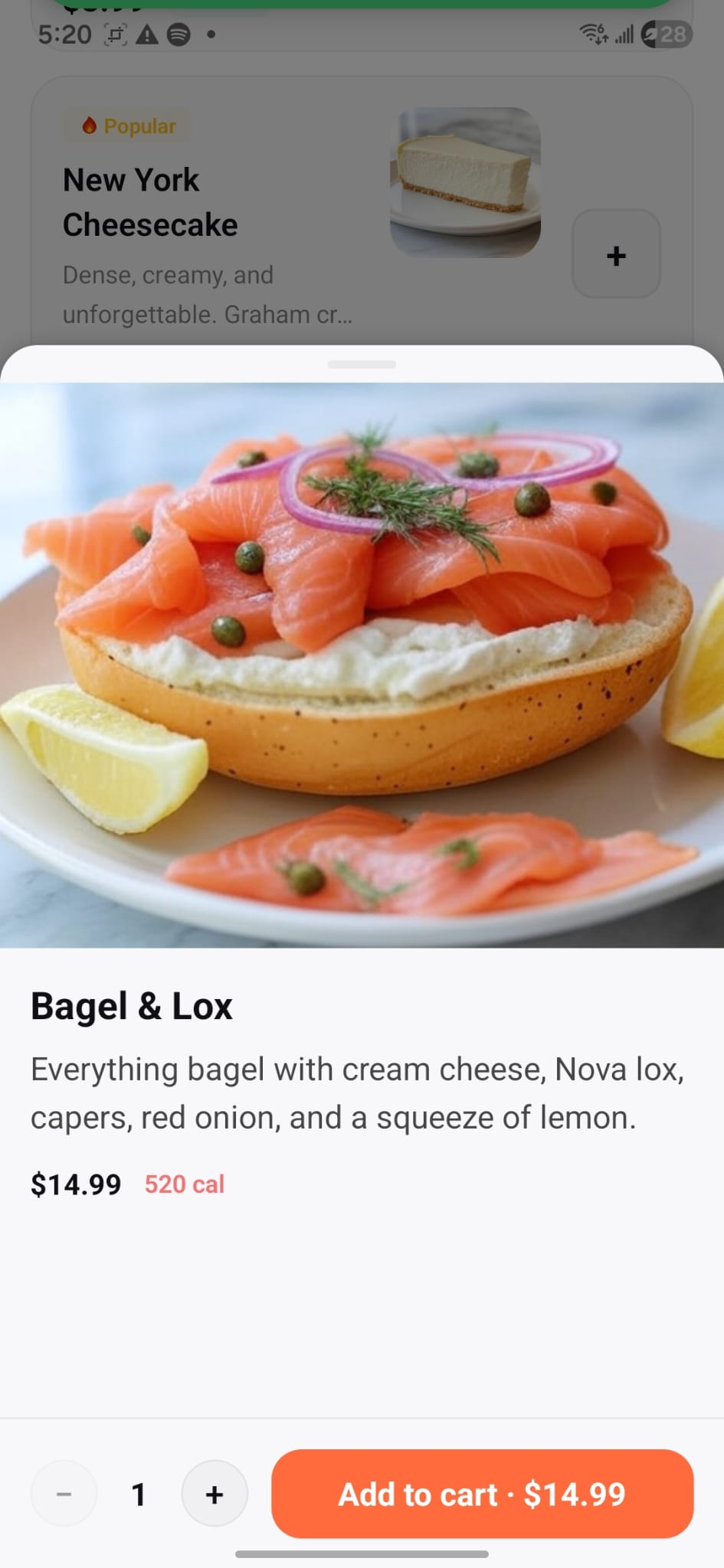
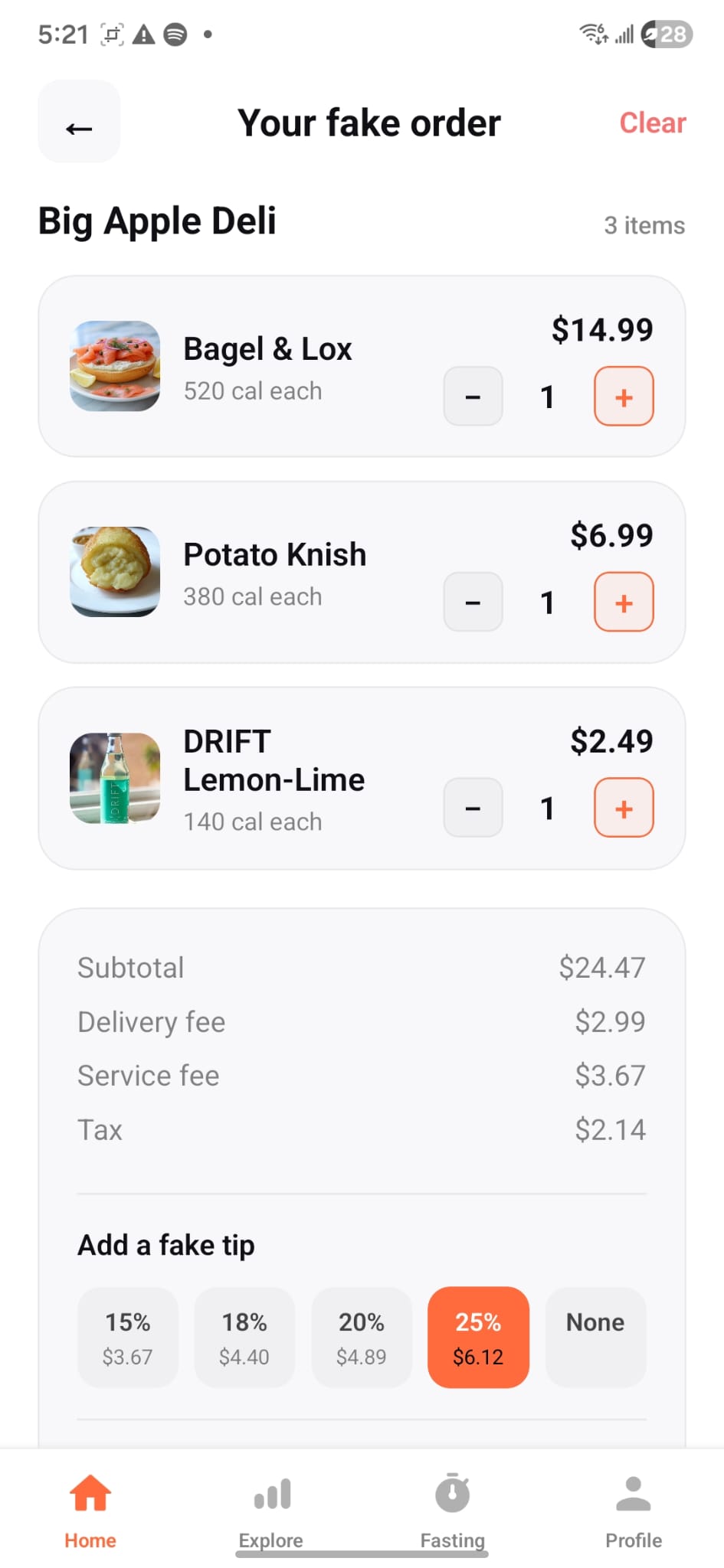
100 restaurants. 80+ cuisines. 600+ menu items with food photography and calorie counts. Build the cart. Add everything you’re craving. The experience mirrors real delivery apps — intentionally. The muscle memory barely notices the difference.

02

Watch & Wait

A fictional driver with a name, photo, car, and rating navigates real streets toward the user for 12 minutes. Mindful urge-surfing messages appear during the wait. The map is real. The driver isn’t.

03

Victory

The craving has passed. A Victory screen shows calories saved, money kept, and streak progress. Every completion is celebrated. Nothing is policed.

Key Facts & Pricing

Everything you need for your story.

ShowHide
100 AI-generated restaurants
80+ cuisines
600+ menu items with AI-generated food photography and calorie counts
12-minute simulated delivery on a live map with real streets
5 AI delivery driver characters with unique personalities and context-aware messaging — cinematic driver experience in development
5 streak tiers: Bronze (1d), Silver (3d), Gold (7d), Platinum (14d), Diamond (30d)
Permanent tier unlocks — never lost, even if streak resets
100+ achievements across victories, money saved, calories saved, and exploration
30+ weekly challenges, resetting every Monday, scaling to individual activity level
5 app skins — change the entire look and feel
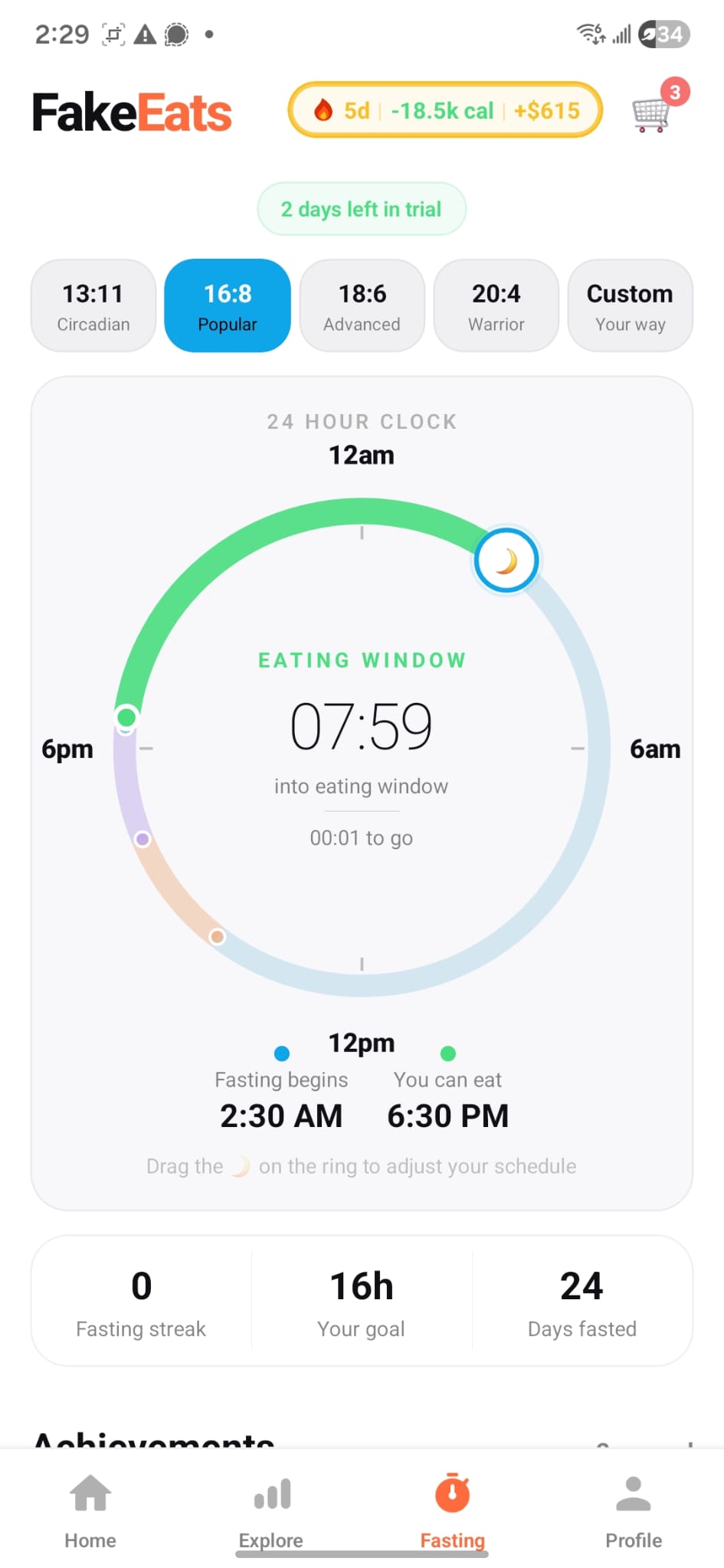
Built-in intermittent fasting timer (16:8, 18:6, 20:4, custom)
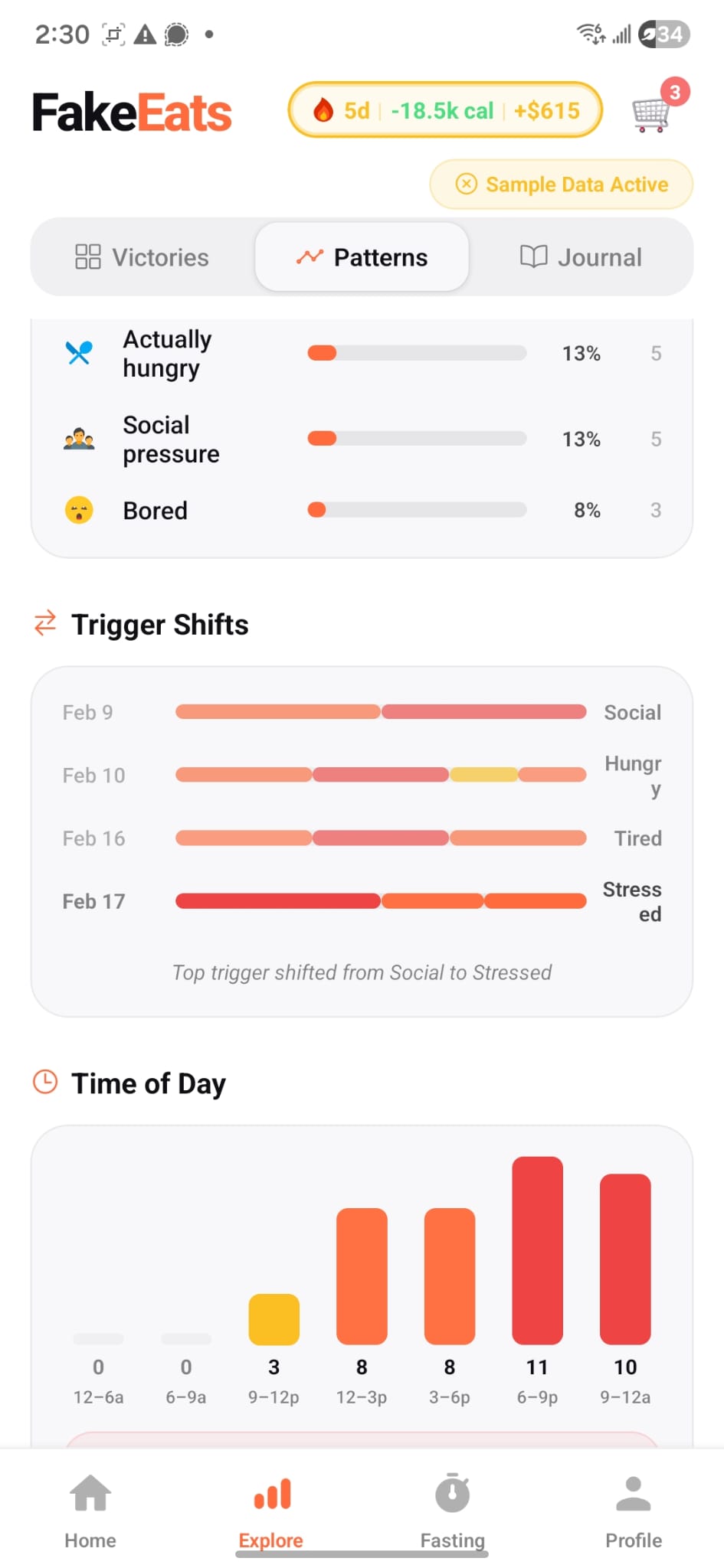
Intel dashboard: craving patterns, trigger breakdowns, time-of-day heatmaps
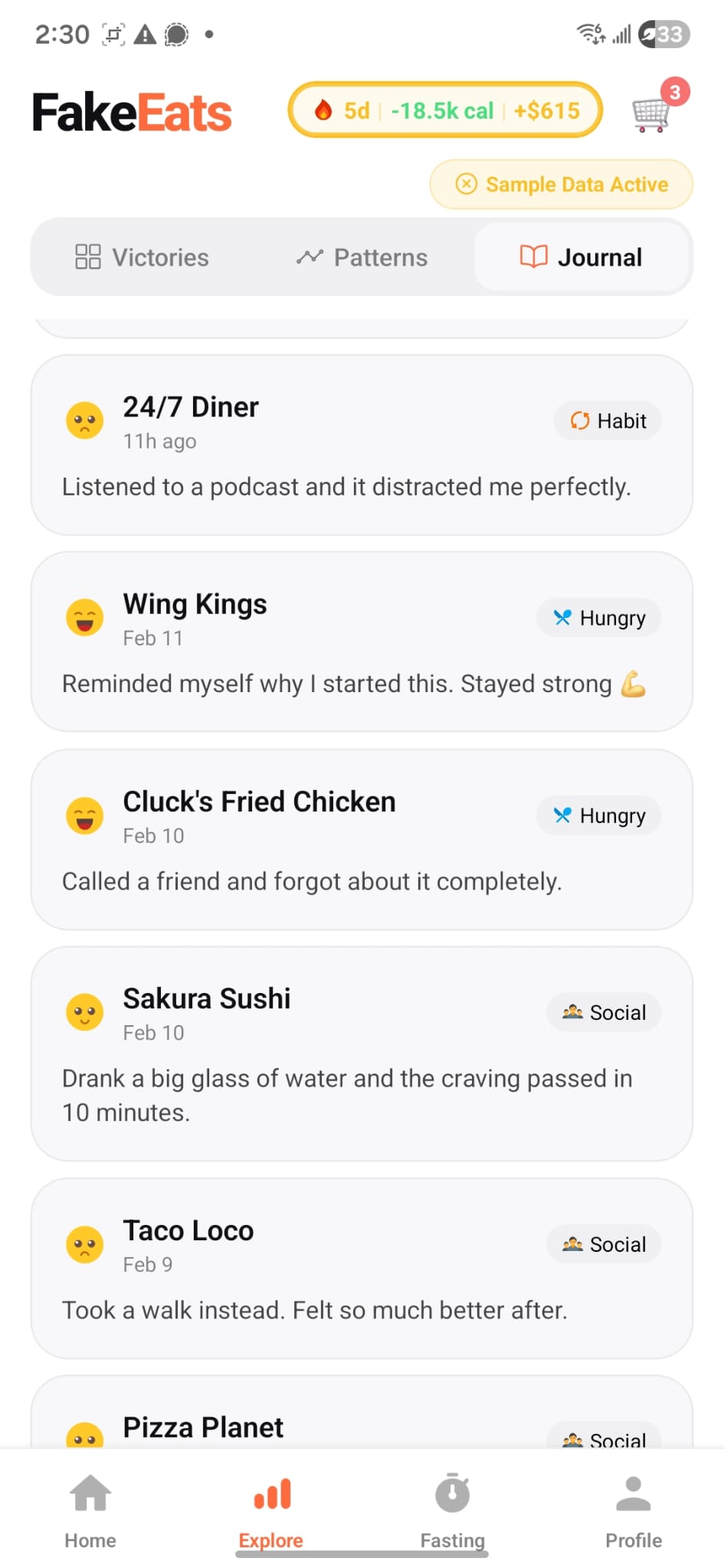
Journal for post-victory reflection
All data stored locally — never sold or shared
Built by a solo developer using AI orchestration
Available on iOS
Free core experience; Pro at $2.49/month billed annually, 7-day free trial
Pricing

Free

Always free
  • 30 restaurants from day one
  • Full order and tracking flow
  • Victory stats
  • Streak tracking
  • Mood check-ins
  • Journal
  • Streak unlocks through Gold tier

Pro

$2.49/month (billed annually) — 7-day free trial
  • Intel dashboard
  • Smart notifications
  • Fasting timer
  • All 5 app skins
  • Streak challenges
  • Platinum and Diamond restaurant tiers
App Screenshots

The full experience, screen by screen.

ShowHide

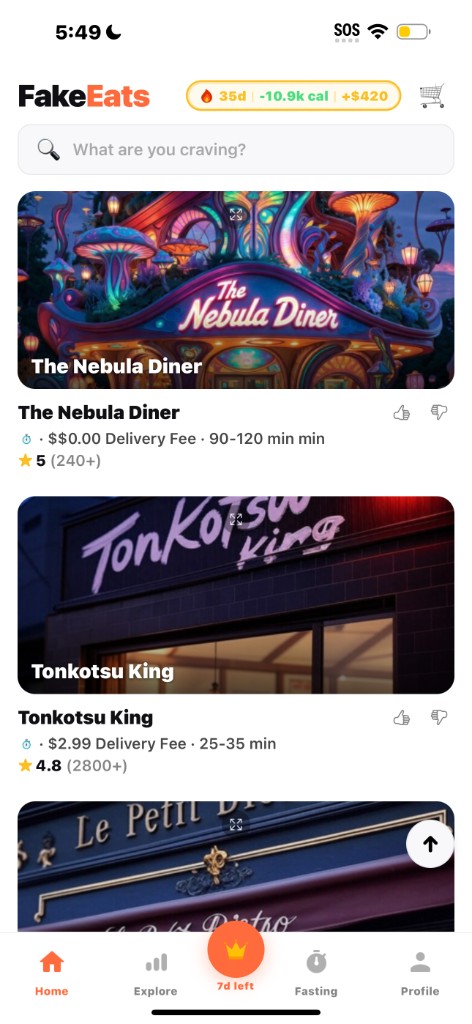
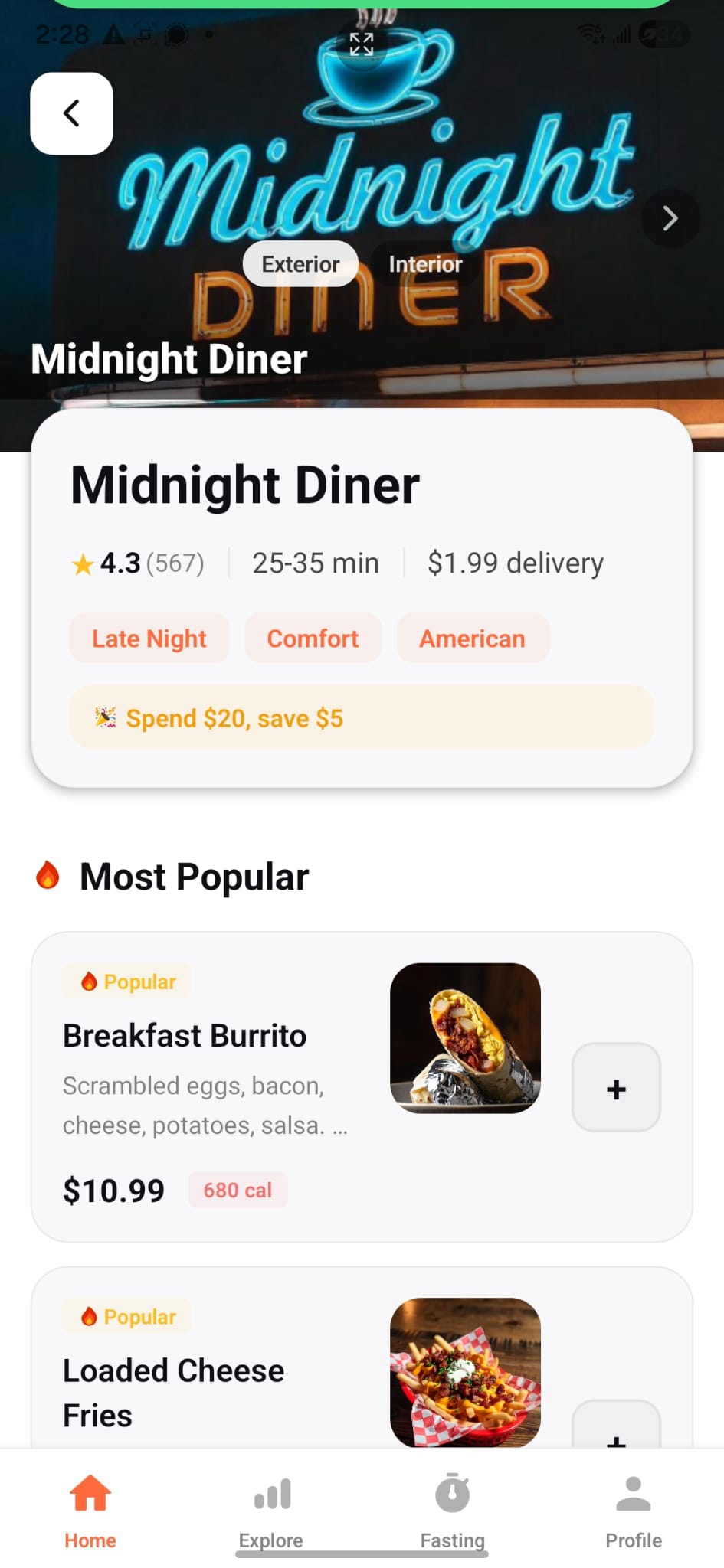
Real screenshots from the app. All restaurants, menus, and food images are AI-generated. Available for editorial use.

Restaurant Feed
Menu & Cart
Food Detail
Checkout
Savings
Live Tracking
Intel Patterns
Victories
Journal
Fasting Timer
Restaurant Feed· Menu & Cart· Food Detail· Checkout· Savings· Live Tracking· Intel Patterns· Victories· Journal· Fasting Timer
Brand Assets

Logos, icons & wordmarks.

ShowHide

All assets available for editorial use. For original high-resolution files, contact [email protected].

Logo Variations
Logo — Burger
Logo — Orange White
Logo — Orange Black
Logo — Black on White
Logo — Green
Logo — Black
Logo — White Orange
Wordmarks
Wordmark — Orange
Wordmark — Green
Horizontal Lockups
Lockup — Horizontal
Lockup — Horizontal Alt

Let’s talk.

Press inquiries, interview requests, and asset downloads.

llms.txt